
- Home
- Services
- Trim, doors and railings
- North York
Trim, doors and railings in North York
Trim, doors and railings get filled, caulked, sanded and finished in a hard waterborne enamel, with doors sprayed flat where it suits. Full interior repaints of new rebuilds, trim and door enamelling in older bungalows, tall foyers and stairwells, and cabinet refinishing.
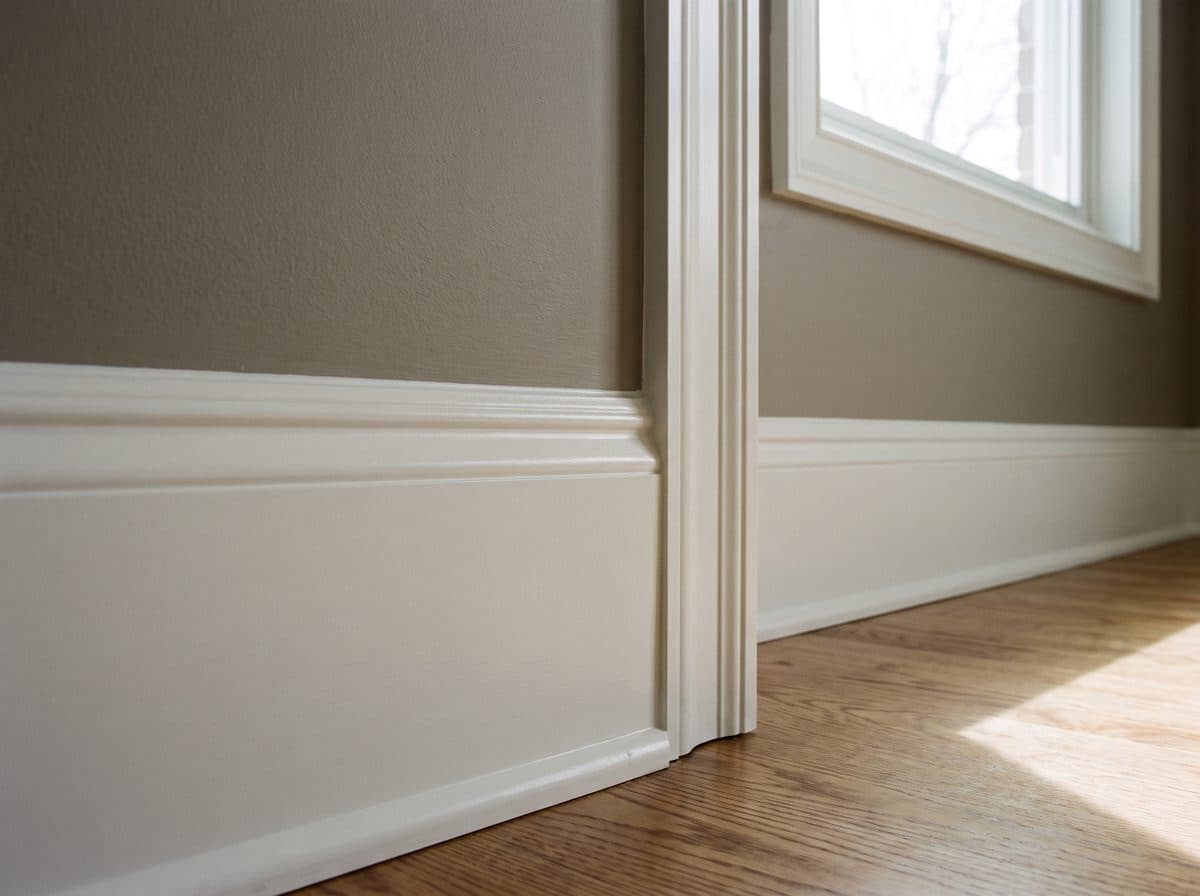 Concept imagery
North York, on the ground.
North York holds postwar bungalows with plaster ceilings and stained trim on the same streets as new rebuilds with nine and ten foot ceilings and builder flat paint. Older homes carry layers of oil paint and stained oak that need a bonding primer, and newer homes carry primed MDF trim that needs filling at the joints before the first finish coat. Lots are wide and driveways are deep, so the crew parks on site and sets up sprayers and scaffold in the garage without blocking the street. Floors are papered, trim is filled and caulked, doors come off for spraying, two coats go on and the tape is pulled while the paint is soft for a clean line.
A new build in North York looks finished and is not, because builder flat paint needs a primer coat before any real colour will sit evenly on it.
Read more about painters in North York or the full trim, doors and railings page.
On the quote, from the start.
- 01Baseboards, door and window casings, crown, wainscoting and built-ins prepped and painted
- 02Nail holes and dents filled, every joint and wall gap caulked, and the old finish sanded for adhesion
- 03A bonding primer on glossy or oil-based finishes so the new enamel does not peel
- 04Two coats of waterborne enamel, such as Benjamin Moore Advance or Sherwin-Williams Emerald Urethane, in satin or semi-gloss
- 05Interior doors removed and sprayed flat, or brushed in place where removal is not practical
- 06Stair rails, newel posts and spindles sanded, primed where needed and finished with a brush
No figures published. The drivers, in order.
| Driver | What we look at |
|---|---|
| Metres of trim and number of doors | Each door has two faces and four edges. A main floor with ten doors and crown throughout is a different job from a hallway. |
| Existing finish | Previously painted trim needs a sand and two coats. Stained and varnished trim needs degreasing, a thorough sand and a bonding primer first. |
| Profile and detail | Flat modern trim brushes quickly. Colonial profiles, panelled doors and turned spindles take more time per piece. |
| Spray or brush | Spraying doors and rails gives the smoothest finish but needs more masking. We recommend the method that suits each piece. |
Trim is often added to an interior walls quote, and the two together take fewer days than booking them apart because the room is only protected once. The quote shows trim as its own line either way.
Trim, doors and railings questions from North York
Can you paint just the trim in my North York home?
Yes. Trim on its own is a common job in North York, especially when the walls are fine and the baseboards and doors have gone yellow. We protect the floors and walls, prep and paint the trim and leave the rest untouched.
Do you paint stair railings in North York?
Yes. Rails, newel posts and spindles are sanded and finished by hand, in white, black or a colour that matches the trim. A railing in a North York home is usually [n] days including cure time between coats.
How do you paint walls that are ten feet tall without damaging the floors and furniture?
Furniture is moved to the centre and wrapped, floors are covered end to end, and the crew works from extension poles, ladders and a plank for the cut line at the ceiling. On a stairwell or a two-storey foyer a small scaffold goes up instead of a ladder. The height adds time and equipment, which is why tall rooms are listed separately on the quote.
Our new North York house still has builder paint. Why does it need a primer before the new colour?
Builder flat paint is applied thin and is usually a low-grade product, so it absorbs the next coat unevenly and the finish dries blotchy, especially in a deep or saturated colour. A tinted primer coat seals it and gives the two finish coats a uniform base. On a new house that is the difference between a wall that looks sprayed and one that looks patched.