
- Home
- Services
- Trim, doors and railings
- Etobicoke
Trim, doors and railings in Etobicoke
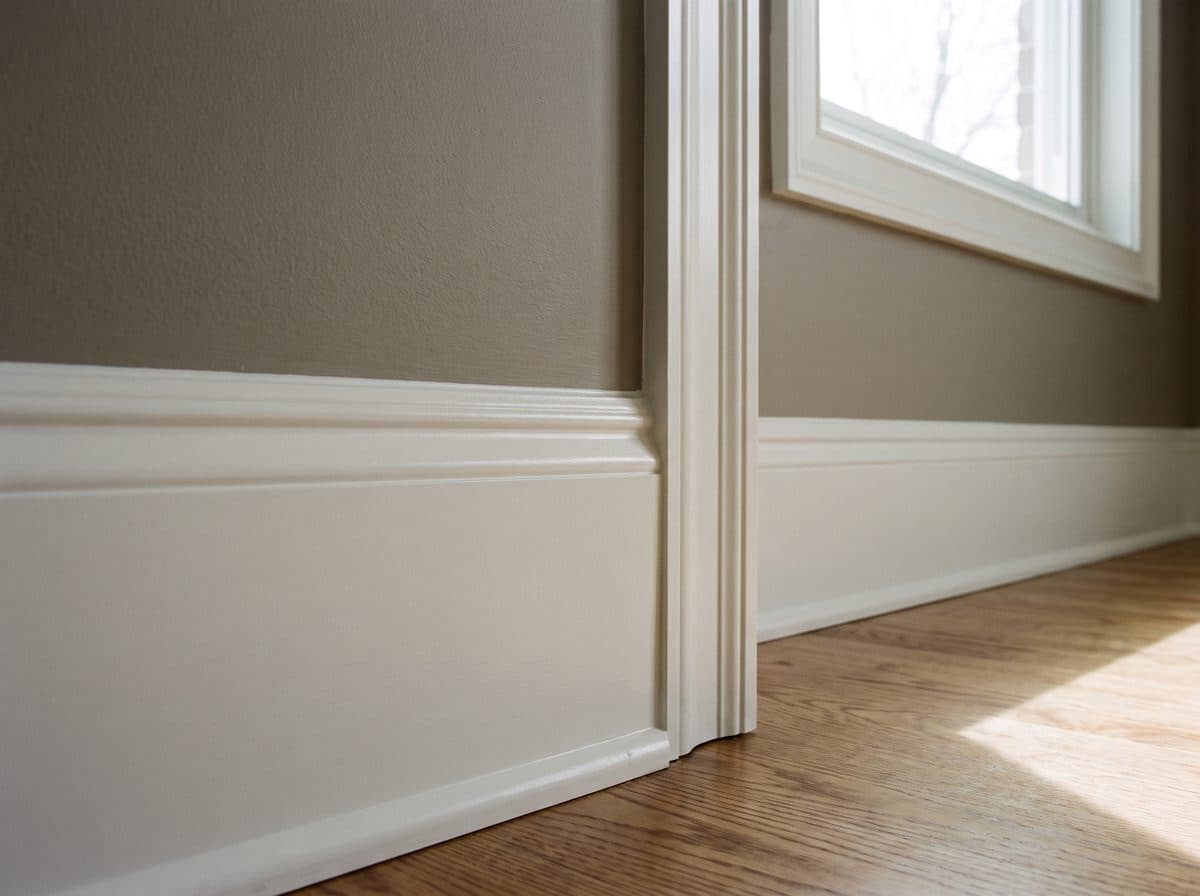
Trim, doors and railings get filled, caulked, sanded and finished in a hard waterborne enamel, with doors sprayed flat where it suits. Trim and door enamelling in the older houses, full interior repaints, stucco and siding exteriors by the lake, and condo repaints before move-in.
 Concept imagery
Etobicoke, on the ground.
Etobicoke covers brick Kingsway houses with plaster and heavy original trim, small stucco and siding bungalows near the lake, and new drywall condo suites along Humber Bay. Older homes carry layers of oil paint and stained oak that need a bonding primer, and newer homes carry primed MDF trim that needs filling at the joints before the first finish coat. Houses take a driveway and a level carry for sprayers and ladders, while Humber Bay condos need a booked elevator and the building's working hours. Floors are papered, trim is filled and caulked, doors come off for spraying, two coats go on and the tape is pulled while the paint is soft for a clean line.
In Etobicoke the detail that decides the job is often the trim already on the wall, so the quote lists sanding and priming it as its own line.
Read more about painters in Etobicoke or the full trim, doors and railings page.
On the quote, from the start.
- 01Baseboards, door and window casings, crown, wainscoting and built-ins prepped and painted
- 02Nail holes and dents filled, every joint and wall gap caulked, and the old finish sanded for adhesion
- 03A bonding primer on glossy or oil-based finishes so the new enamel does not peel
- 04Two coats of waterborne enamel, such as Benjamin Moore Advance or Sherwin-Williams Emerald Urethane, in satin or semi-gloss
- 05Interior doors removed and sprayed flat, or brushed in place where removal is not practical
- 06Stair rails, newel posts and spindles sanded, primed where needed and finished with a brush
No figures published. The drivers, in order.
| Driver | What we look at |
|---|---|
| Metres of trim and number of doors | Each door has two faces and four edges. A main floor with ten doors and crown throughout is a different job from a hallway. |
| Existing finish | Previously painted trim needs a sand and two coats. Stained and varnished trim needs degreasing, a thorough sand and a bonding primer first. |
| Profile and detail | Flat modern trim brushes quickly. Colonial profiles, panelled doors and turned spindles take more time per piece. |
| Spray or brush | Spraying doors and rails gives the smoothest finish but needs more masking. We recommend the method that suits each piece. |
Trim is often added to an interior walls quote, and the two together take fewer days than booking them apart because the room is only protected once. The quote shows trim as its own line either way.
Trim, doors and railings questions from Etobicoke
Can you paint just the trim in my Etobicoke home?
Yes. Trim on its own is a common job in Etobicoke, especially when the walls are fine and the baseboards and doors have gone yellow. We protect the floors and walls, prep and paint the trim and leave the rest untouched.
Do you paint stair railings in Etobicoke?
Yes. Rails, newel posts and spindles are sanded and finished by hand, in white, black or a colour that matches the trim. A railing in a Etobicoke home is usually [n] days including cure time between coats.
We have wood siding and soffits that are peeling. What does the prep look like?
Peeling wood is scraped back to a sound edge, feather-sanded so the step does not show, and spot-primed with an exterior primer. Bare wood gets a full primer coat. Then two coats of exterior acrylic. Where boards are rotten, we tell you before painting, because paint does not fix a board that needs replacing. The quote lists the scraping and priming so you can see where the hours go.
The original trim in our Kingsway house is thick with old paint. Can it be made crisp again without replacing it?
Usually, yes. The crew sands the built-up paint back until the profile reads clearly, fills chips and nail holes, primes the bare spots and applies two coats of a hard enamel. Where the build-up is too deep, we strip the worst sections before priming. [Paint older than the late 1970s may contain lead, so sanding is done wet or with a vacuum sander and the area is sealed.] The result is sharper lines and a trim you can wipe.