
- Home
- Services
- Drywall repair and painting
- Richmond Hill
Drywall repair and painting in Richmond Hill
Richmond Hill mixes postwar houses with plaster, bulkheads and original oak kitchens around Yonge and Bayview with newer subdivision and infill houses in builder flat paint. Older homes bring plaster over lath and settlement cracks that need a different patch than drywall, and newer homes bring nail pops, soft corners and doorknob holes in standard board. Drywall repair from Absolut patches, tapes, skims and primes the wall, then paints it corner to corner so the repair cannot be found.
 Concept imagery
Richmond Hill, on the ground.
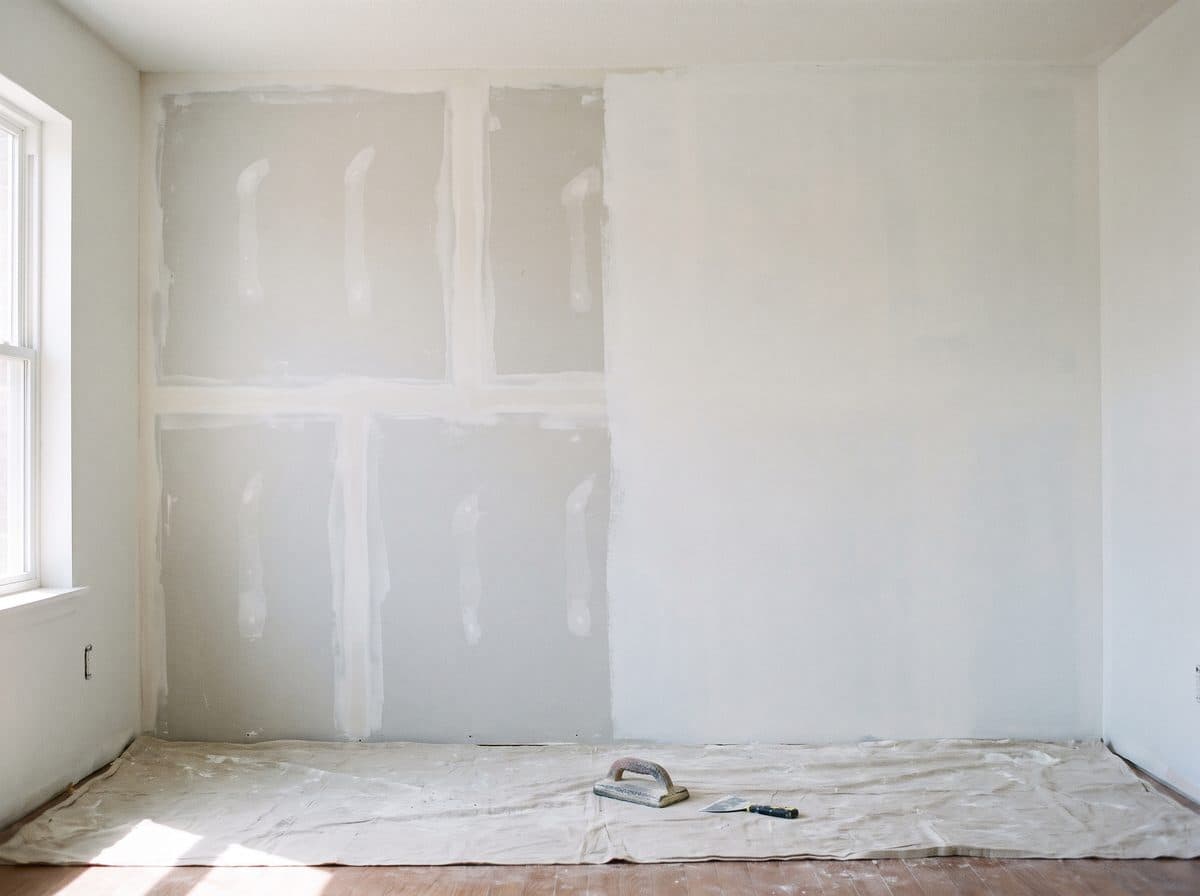
Kitchen cabinet refinishing, home offices and feature walls, whole-house interiors, trim and doors, and exterior trim are the usual Richmond Hill jobs. Floors are covered, damage is cut out or taped, compound goes on in thin coats with drying time, dust is controlled with a vacuum sander and the wall is primed and painted in two coats.
A Richmond Hill kitchen often still has its original oak doors, so cabinet refinishing is quoted as its own job with a sample door before anything is sprayed.
Read more about painters in Richmond Hill or the full drywall repair and painting page.
On the quote, from the start.
- 01Holes from doorknobs, anchors and plumbing access patched with new board or a backed patch, not just filler
- 02Cracks at corners, over doors and along seams cut back, taped with mesh or paper and filled in layers
- 03Nail pops reset with new screws and filled, then sanded flush
- 04Rough or previously textured walls skimmed with compound and sanded smooth
- 05All repairs primed with a drywall primer so the patch takes paint the same as the wall around it
- 06The repaired wall painted corner to corner in two coats so there is no halo where the patch was
No figures published. The drivers, in order.
| Driver | What we look at |
|---|---|
| Size and number of repairs | A few anchor holes is an hour of filling. A wall with a dozen patches, or a full skim coat, is a multi-day job with drying time between coats. |
| Depth of damage | Surface dents take one coat of compound. Holes through the board need a backer and new drywall, and water damage may need the board cut out. |
| Matching the surrounding finish | A smooth wall is straightforward. A textured, stippled or orange-peel wall needs the texture recreated so the patch blends. |
| Repainting scope | Painting the patch alone will show. Painting the whole wall, or the whole room, is what makes the repair vanish and sets the paint time. |
Drying time, not labour, stretches a drywall job. Compound needs to cure between coats, so a small repair can still span [n] days even if the crew is only there a few hours each visit.
Drywall repair and painting questions from Richmond Hill
Do you do small drywall repairs in Richmond Hill?
Yes. A few holes before a move-out, a crack over a doorway or a patch after an electrician are common calls in Richmond Hill. There is a [n] hour minimum visit, and the repair is painted to match or the wall repainted, whichever you choose.
Can you repair plaster walls in Richmond Hill homes?
Yes. Older Richmond Hill houses often have plaster over lath. Loose plaster is reattached or cut back and filled with a setting compound, then skimmed and primed. The repair is matched to the plaster's slight texture rather than left dead flat.
Can our 1990s oak kitchen be painted so the grain does not show through?
Yes. Oak has an open grain that telegraphs through paint unless it is filled. The doors are degreased, sanded, grain-filled, sanded again and primed with a bonding primer before two sprayed coats of enamel. Skipping the filler leaves a textured door, which some clients want and most do not. We show you a sample door both ways so you choose before the kitchen is taken apart.
I want a dark navy or green wall in my home office. Why does it take more coats?
Deep colours have less hiding pigment than whites, so they cover unevenly over a light wall. The fix is a grey-tinted primer matched to the finish colour, then two full coats, and sometimes a third on a wall that gets strong side light. Dark walls also show every roller lap if they are rushed, so the crew keeps a wet edge and rolls the full height in one pass.