
Drywall repair and painting in Markham
Drywall repair from Absolut patches, tapes, skims and primes the wall, then paints it corner to corner so the repair cannot be found. Heritage exteriors and trim, great rooms and foyers in new houses, whole-house interiors and cabinet refinishing are the usual Markham jobs.
 Concept imagery
Markham, on the ground.
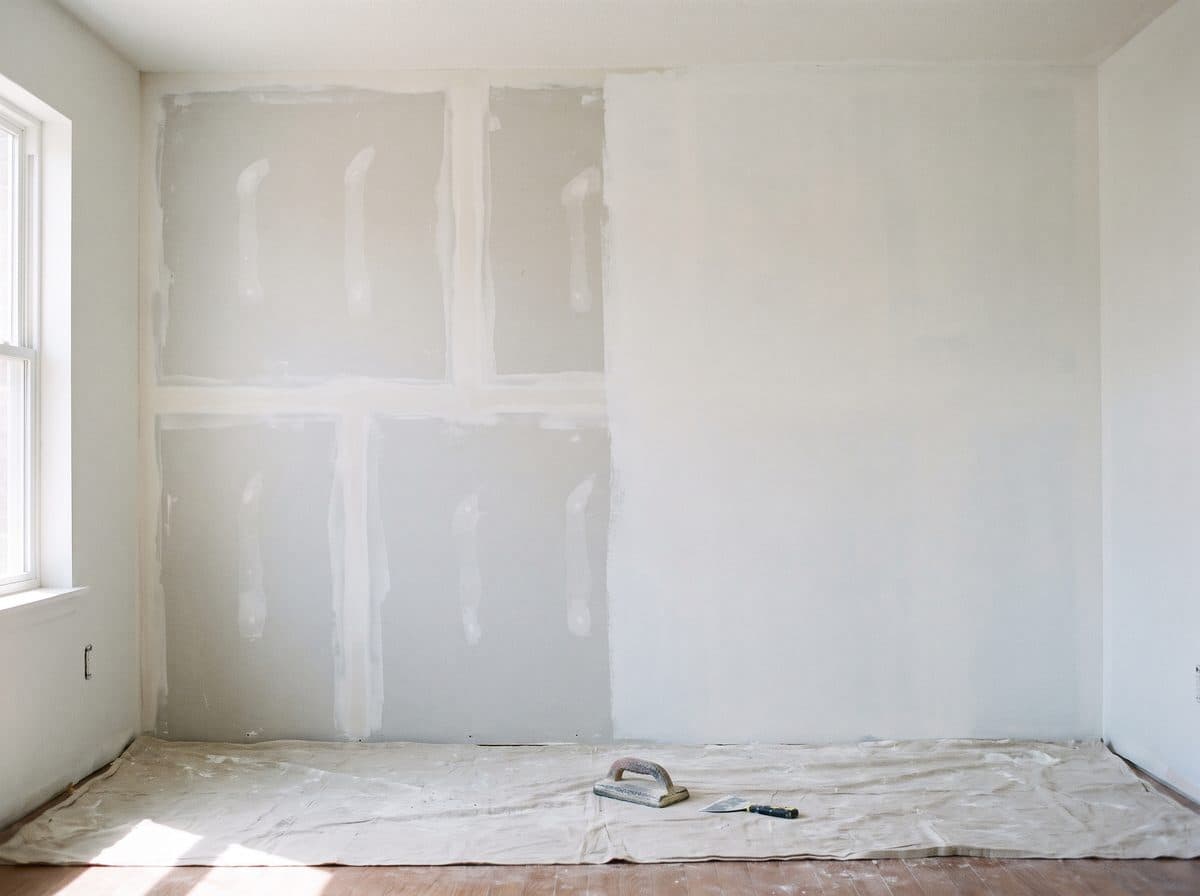
Markham runs from heritage frame and brick houses in the Village and Unionville, with plaster walls and painted wood siding, to newer estate housing in Cornell and Angus Glen with tall rooms and builder flat paint. Older homes bring plaster over lath and settlement cracks that need a different patch than drywall, and newer homes bring nail pops, soft corners and doorknob holes in standard board. Newer houses take a van in the driveway and a level carry for scaffold, while heritage houses have narrow doors and halls that decide how the crew stages its equipment. Floors are covered, damage is cut out or taped, compound goes on in thin coats with drying time, dust is controlled with a vacuum sander and the wall is primed and painted in two coats.
An older house in Markham may sit in a heritage district, so exterior colours are chosen from palettes that suit the street and checked against the Town's guidance.
Read more about painters in Markham or the full drywall repair and painting page.
On the quote, from the start.
- 01Holes from doorknobs, anchors and plumbing access patched with new board or a backed patch, not just filler
- 02Cracks at corners, over doors and along seams cut back, taped with mesh or paper and filled in layers
- 03Nail pops reset with new screws and filled, then sanded flush
- 04Rough or previously textured walls skimmed with compound and sanded smooth
- 05All repairs primed with a drywall primer so the patch takes paint the same as the wall around it
- 06The repaired wall painted corner to corner in two coats so there is no halo where the patch was
No figures published. The drivers, in order.
| Driver | What we look at |
|---|---|
| Size and number of repairs | A few anchor holes is an hour of filling. A wall with a dozen patches, or a full skim coat, is a multi-day job with drying time between coats. |
| Depth of damage | Surface dents take one coat of compound. Holes through the board need a backer and new drywall, and water damage may need the board cut out. |
| Matching the surrounding finish | A smooth wall is straightforward. A textured, stippled or orange-peel wall needs the texture recreated so the patch blends. |
| Repainting scope | Painting the patch alone will show. Painting the whole wall, or the whole room, is what makes the repair vanish and sets the paint time. |
Drying time, not labour, stretches a drywall job. Compound needs to cure between coats, so a small repair can still span [n] days even if the crew is only there a few hours each visit.
Drywall repair and painting questions from Markham
Do you do small drywall repairs in Markham?
Yes. A few holes before a move-out, a crack over a doorway or a patch after an electrician are common calls in Markham. There is a [n] hour minimum visit, and the repair is painted to match or the wall repainted, whichever you choose.
Can you repair plaster walls in Markham homes?
Yes. Older Markham houses often have plaster over lath. Loose plaster is reattached or cut back and filled with a setting compound, then skimmed and primed. The repair is matched to the plaster's slight texture rather than left dead flat.
Our great room wall is about eighteen feet tall. How is that painted?
From a scaffold tower set on protected floors, with the crew cutting the ceiling line by hand and rolling the wall in vertical sections so the sheen stays even from top to bottom. A wall that tall shows lap marks if the roller dries between passes, so two painters work it together. The great room is its own line on the quote because of the equipment and the time.
The wood siding on our Markham Village house is chalking and the paint is thin. Is it ready for a repaint?
Chalking means the old paint has broken down and needs washing off before anything new will stick. The siding is pressure-washed, scraped where it is lifting, feather-sanded, primed on bare wood and spot-primed elsewhere, then painted with two coats of exterior acrylic. If the chalk is heavy, a full primer coat goes on. Exterior work waits for warm, dry weather.