
- Home
- Services
- Deck and fence staining
- Etobicoke
Deck and fence staining in Etobicoke
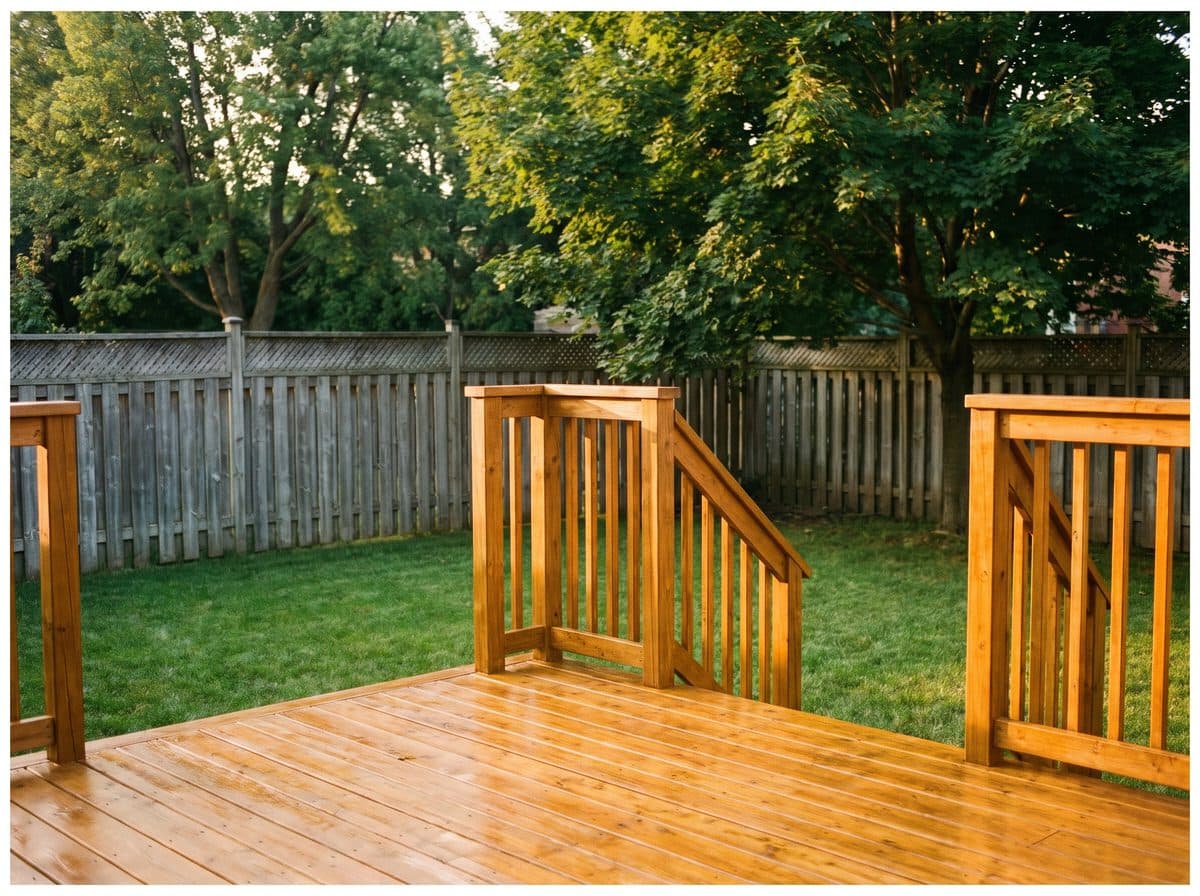
Etobicoke covers brick Kingsway houses with plaster and heavy original trim, small stucco and siding bungalows near the lake, and new drywall condo suites along Humber Bay. Older yards carry cedar decks and fences that have greyed and need brightening, and newer subdivisions carry pressure-treated decks that must dry out before a first coat. Deck and fence staining starts with clean, dry wood and ends with the stain and opacity that suit the species and the weather it takes.
 Concept imagery
Etobicoke, on the ground.
Trim and door enamelling in the older houses, full interior repaints, stucco and siding exteriors by the lake, and condo repaints before move-in. The wood is washed, brightened and left to dry, failing stain is stripped, the surroundings are masked, and the stain goes on by brush and pad with railings done by hand.
In Etobicoke the detail that decides the job is often the trim already on the wall, so the quote lists sanding and priming it as its own line.
Read more about painters in Etobicoke or the full deck and fence staining page.
On the quote, from the start.
- 01A moisture check on the wood and a look at the old finish to decide between a refresh and a strip
- 02Wash with a deck cleaner, then a brightener to lift the grey and open the grain
- 03Old stain stripped where it is failing, and smooth boards sanded so the new coat soaks in evenly
- 04Loose boards and popped screws reset, and badly rotted boards flagged for replacement before staining
- 05Stain applied by brush, pad or sprayed and back-brushed, with railings, spindles and stairs done by hand
- 06Plants, siding and patio stone masked, and a final walk around with you once the deck is dry to use
No figures published. The drivers, in order.
| Driver | What we look at |
|---|---|
| Square footage and railing length | The deck surface goes quickly. Spindles, stairs, lattice and the underside of a raised deck are brushed by hand and take most of the time. |
| Condition of the old finish | Bare or lightly weathered wood needs a wash and stain. A peeling solid stain needs stripping and sanding first, which can double the prep. |
| Type of stain | Transparent and semi-transparent stains go on in one coat and show the wood. Solid stains behave like paint and often take two. |
| Fence length and both sides | A fence is measured in linear metres, counted twice if we are doing your neighbour's side too. |
Weather sets the schedule. Stain needs dry wood, a dry forecast for a day or two after, and a surface that is not too hot, so a July heatwave can wait just as a wet May does.
Deck and fence staining questions from Etobicoke
How early can you stain a deck in Etobicoke?
Once Etobicoke has a stretch of dry days with temperatures above the product's minimum and the wood reads dry on the meter, usually from [late May]. We book spring decks over the winter because the window fills quickly.
Can you stain my Etobicoke fence on both sides?
Yes, with your neighbour's agreement for their side. It is the most common fence request in Etobicoke because the colour and finish match from either yard. We mask their plantings the same as yours.
We have wood siding and soffits that are peeling. What does the prep look like?
Peeling wood is scraped back to a sound edge, feather-sanded so the step does not show, and spot-primed with an exterior primer. Bare wood gets a full primer coat. Then two coats of exterior acrylic. Where boards are rotten, we tell you before painting, because paint does not fix a board that needs replacing. The quote lists the scraping and priming so you can see where the hours go.
The original trim in our Kingsway house is thick with old paint. Can it be made crisp again without replacing it?
Usually, yes. The crew sands the built-up paint back until the profile reads clearly, fills chips and nail holes, primes the bare spots and applies two coats of a hard enamel. Where the build-up is too deep, we strip the worst sections before priming. [Paint older than the late 1970s may contain lead, so sanding is done wet or with a vacuum sander and the area is sealed.] The result is sharper lines and a trim you can wipe.