
- Home
- Services
- Deck and fence staining
- East Gwillimbury
Deck and fence staining in East Gwillimbury
Driveways in the new sections are wide and the garage gives a clean path in, while rural houses need the route and a site contact confirmed before the crew heads out. The wood is washed, brightened and left to dry, failing stain is stripped, the surroundings are masked, and the stain goes on by brush and pad with railings done by hand. Deck and fence staining starts with clean, dry wood and ends with the stain and opacity that suit the species and the weather it takes.
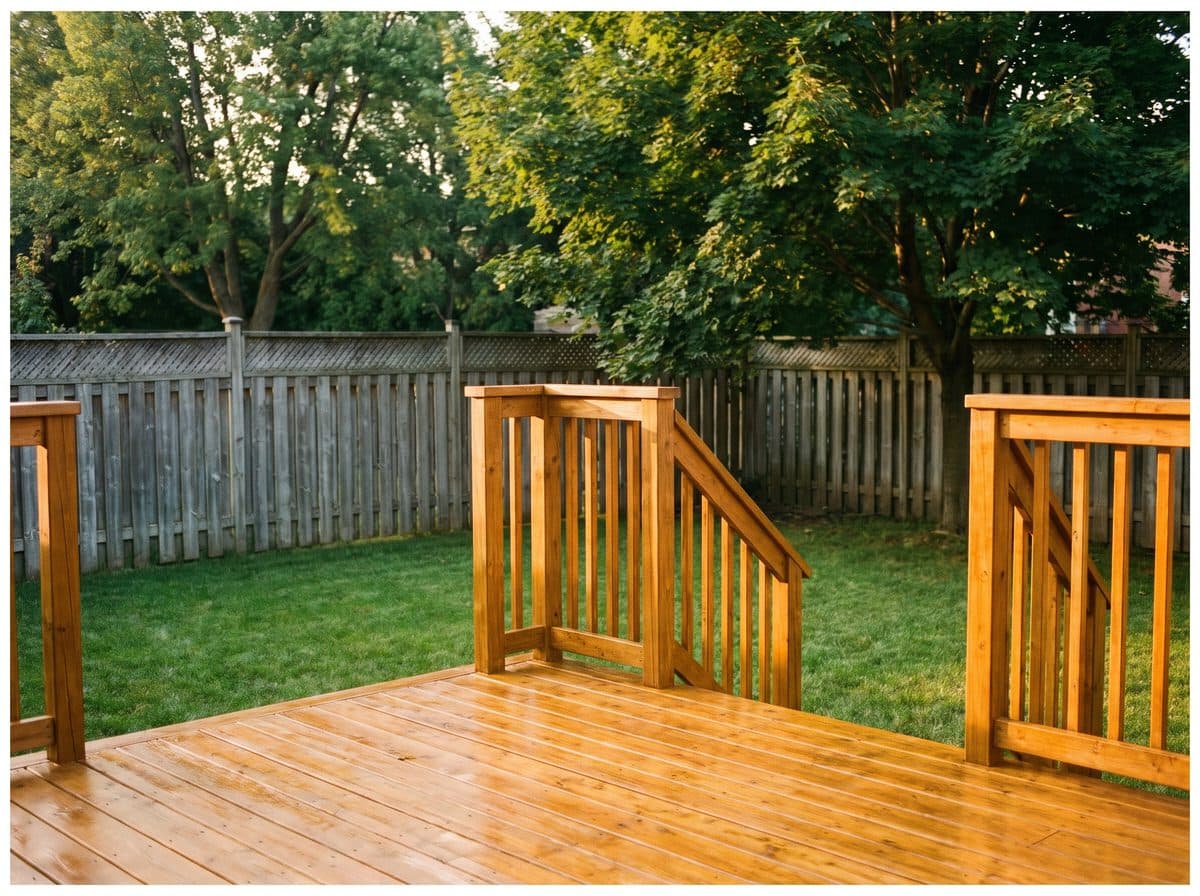 Concept imagery
East Gwillimbury, on the ground.
East Gwillimbury mixes new subdivisions in Queensville, Sharon and Holland Landing, in builder flat paint, with older plaster farmhouses with wood siding on the concession roads. Older yards carry cedar decks and fences that have greyed and need brightening, and newer subdivisions carry pressure-treated decks that must dry out before a first coat. Pre-move-in repaints of new houses, nail pop and crack repair, trim and doors, and farmhouse interiors and siding make up the East Gwillimbury work.
New houses in East Gwillimbury arrive with nail pops and corner cracks the builder paint hides, so the first repaint starts by finding and filling them.
Read more about painters in East Gwillimbury or the full deck and fence staining page.
On the quote, from the start.
- 01A moisture check on the wood and a look at the old finish to decide between a refresh and a strip
- 02Wash with a deck cleaner, then a brightener to lift the grey and open the grain
- 03Old stain stripped where it is failing, and smooth boards sanded so the new coat soaks in evenly
- 04Loose boards and popped screws reset, and badly rotted boards flagged for replacement before staining
- 05Stain applied by brush, pad or sprayed and back-brushed, with railings, spindles and stairs done by hand
- 06Plants, siding and patio stone masked, and a final walk around with you once the deck is dry to use
No figures published. The drivers, in order.
| Driver | What we look at |
|---|---|
| Square footage and railing length | The deck surface goes quickly. Spindles, stairs, lattice and the underside of a raised deck are brushed by hand and take most of the time. |
| Condition of the old finish | Bare or lightly weathered wood needs a wash and stain. A peeling solid stain needs stripping and sanding first, which can double the prep. |
| Type of stain | Transparent and semi-transparent stains go on in one coat and show the wood. Solid stains behave like paint and often take two. |
| Fence length and both sides | A fence is measured in linear metres, counted twice if we are doing your neighbour's side too. |
Weather sets the schedule. Stain needs dry wood, a dry forecast for a day or two after, and a surface that is not too hot, so a July heatwave can wait just as a wet May does.
Deck and fence staining questions from East Gwillimbury
How early can you stain a deck in East Gwillimbury?
Once East Gwillimbury has a stretch of dry days with temperatures above the product's minimum and the wood reads dry on the meter, usually from [late May]. We book spring decks over the winter because the window fills quickly.
Can you stain my East Gwillimbury fence on both sides?
Yes, with your neighbour's agreement for their side. It is the most common fence request in East Gwillimbury because the colour and finish match from either yard. We mask their plantings the same as yours.
The siding on our farmhouse is old painted wood. Can it be repainted rather than replaced?
Yes, if the boards are sound. The siding is washed to remove chalk and mildew, scraped back to a firm edge, feather-sanded, primed on bare wood and painted with two coats of exterior acrylic. Boards that are split or soft are pointed out before painting. On an old farmhouse the prep is most of the job, which the quote shows line by line, and it is done in warm, dry weather.
Our new build in Queensville has nail pops showing through the paint. Is that fixed before you repaint?
Yes. Each pop is driven back or replaced with a screw beside it, filled with two thin coats of compound, sanded flush and spot-primed before the wall gets its primer and finish coats. Painting over a pop without fixing it leaves a bump that comes back. We walk the house with a light held low to find them, because they hide in flat paint and show in eggshell.