
Commercial and office painting in East York
Front doors open onto narrow halls and parking is on the street, so the crew carries equipment in and paints room by room around a family living there. Each shift covers floors and equipment, fills and primes the walls, paints two coats of a durable commercial line with doors and frames in enamel and resets the site before it reopens. Commercial and office painting is scheduled around your hours, in scrub-resistant paint, with the site clean and open at the start of every business day.
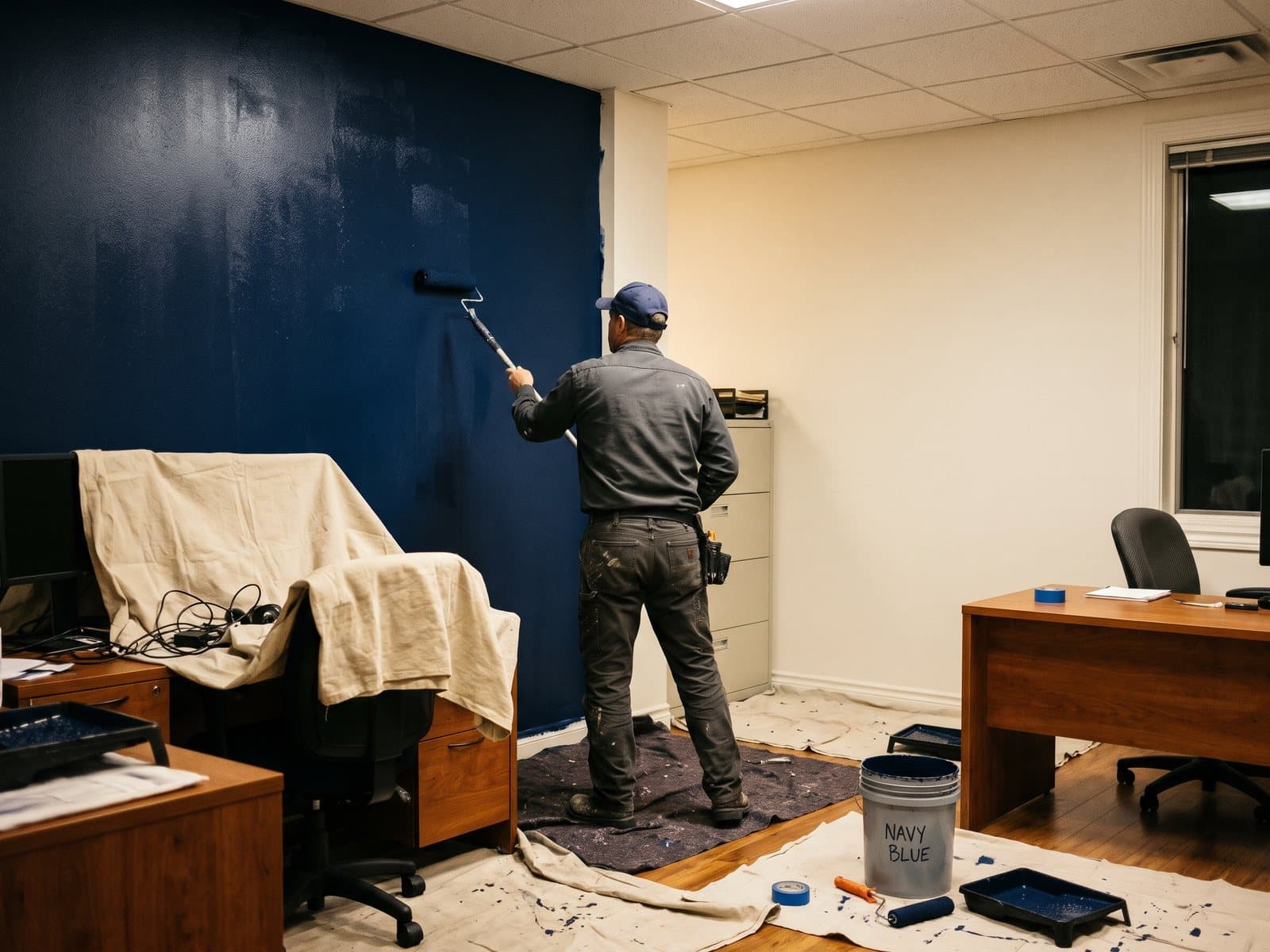 Concept imagery
East York, on the ground.
East York is small wartime and postwar houses plus Leaside brick, with plaster walls, cast iron radiators, low ceilings and painted trim from the 1920s onward. Main-street storefronts bring older walls, tall ceilings and tenants on either side, and newer office and medical buildings bring drywall, metal doors and property-manager rules on hours and paint. Full interior repaints, trim and door enamelling, radiators, and exterior wood trim and porches are the usual East York jobs.
Because a East York house is compact, the trim is in your eyeline everywhere, so it gets sanded, primed and enamelled rather than just recoated.
Read more about painters in East York or the full commercial and office painting page.
On the quote, from the start.
- 01A site visit during your hours to see the traffic, the finishes and the areas that must stay open
- 02A written schedule for after-hours, weekend or phased work, agreed with you before the start
- 03Floors, fixtures, furniture and equipment covered, and signage and IT masked rather than moved
- 04Walls prepped and painted in two coats of a durable commercial line such as Benjamin Moore Ultra Spec Scuff-X or Sherwin-Williams Pro Industrial
- 05Doors, frames, trim and railings in a hard enamel that stands up to carts and hands
- 06Site cleaned and reset at the end of each shift so staff and customers walk in to a working room
No figures published. The drivers, in order.
| Driver | What we look at |
|---|---|
| Floor area and wall height | Open-plan offices and retail with tall walls are measured in square metres of wall, and high ceilings add lift or staging time. |
| Working hours | After-hours and weekend shifts keep you open but shorten the painting day. Phased work adds set-up and clean-up for each zone. |
| Surface and finish | Painted drywall is the baseline. Concrete block, metal doors and frames, exposed ductwork and previously wallpapered walls each need their own primer and method. |
| Durability required | A quiet office does well with standard low-VOC paint. A clinic, a daycare corridor or a restaurant kitchen needs scrubbable or washable coatings. |
The schedule is the biggest line on a commercial quote. Tell us when the building is empty and when it must be back in use, and the quote is written to those hours.
Commercial and office painting questions from East York
Do you paint offices in East York after hours?
Yes. Evening, overnight and weekend shifts are how most East York commercial jobs run, with low-odour paint so the office is usable the next morning. We agree on the hours with you and the building before the quote is signed.
Can you paint a East York storefront while it trades?
Yes, in phases. A shop in East York is usually painted overnight, or one wall at a time behind plastic during slow hours, so the door never closes. Exterior signage and the front are done in the morning before opening or after close.
The rooms in our Leaside house are small. What colour and sheen choices help?
Keep the ceiling a true flat white and the walls in an eggshell or matte, which reads softer and hides small plaster flaws. Painting the trim the same colour as the walls, a step higher in sheen, removes the lines that chop up a small room. Lighter, warmer whites suit the north-facing rooms these houses often have. We bring fan decks to the walkthrough and paint sample patches on your walls before you decide.
Our East York house is from the 1920s. Is the old paint on the trim a lead concern?
It can be. Paint applied before the late 1970s may contain lead, and the trim in a house that age usually carries coats from every decade. We do not dry-sand it. The crew uses wet sanding or a vacuum sander, seals the room, and cleans up with HEPA equipment. [John confirms testing and containment practice.] Once the old paint is sound and primed, the new enamel goes on as normal.